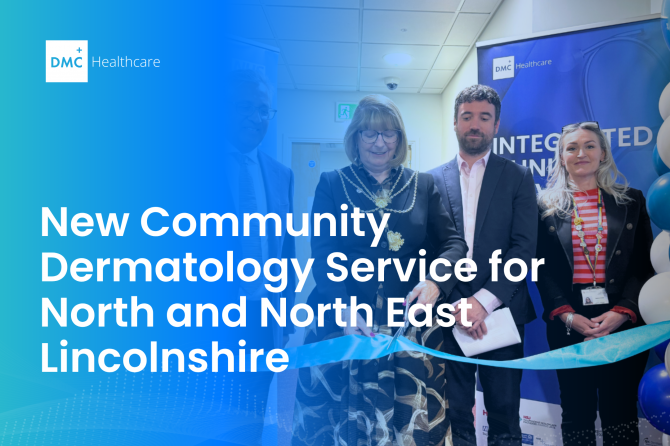


We are proud to announce that our project, focused on reducing dermatology patient waiting lists in Lincolnshire as part of the post-COVID recovery effort, has been selected as a finalist for both the HSJ Independent Healthcare…
Read more
In the 2025 NHS budget announcement, the government committed to its largest funding increase since 2010 (excluding COVID-related funding). A significant portion of this funding will focus on reducing waiting lists and enhancing patient care, with the target of…
Read more
DMC Healthcare is proud to announce the successful mobilisation of an insourced audiology clinic within an exceptional two-week timeframe. This rapid deployment underscores our capability to meet the critical needs of NHS Trusts, delivering efficient, high-quality…
Read moreClinical effectiveness means ensuring that all aspects of service delivery are designed to provide the best outcomes for patients. This is achieved by ensuring that the right care is delivered to the right person at the right time they are in need and in the correct setting.
A patient’s information should always be up to date and correct on any systems used. It should also be confidential through correct storage and management of data.
Risk Management involves having robust systems in place to understand, monitor and minimise the risks to patients and staff and to learn from mistakes. When things go wrong in the delivery of care, our staff teams should feel safe admitting it and be able to learn and share what they have learnt, which embeds change in practice.
Communication with patients and the public is essential to gain insight on the quality of care we deliver, and any possible problems that can result. Public involvement is equally as important to ensure that patient and public feedback is used to improve services into day-to-day practice for better patient outcomes.
This encompasses the provision of appropriate support to enable staff to be competent in doing their jobs and to develop their skills so that they are up to date. Professional development needs to continue through lifelong learning.
This ensures the organisation recruits highly skilled staff and aligns them with the correct job roles. Staff are supported in professional development and to gain and improve their skills.
The aim of the audit process is to ensure that clinical practice is continuously monitored and that deficiencies in relation to set standards of care are remedied. Research goes alongside audits to pioneer best practice improvements.