• JULY 28, 2022
    • 0
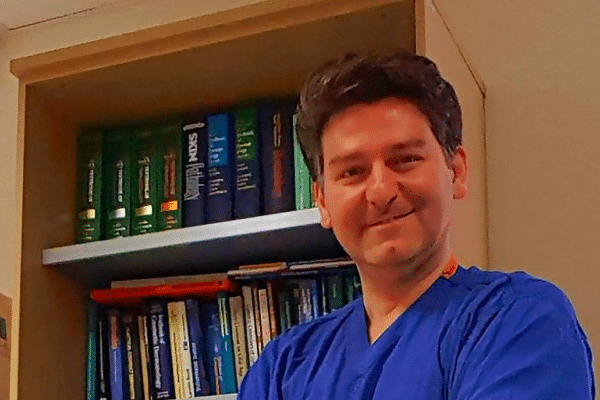
    People Story | Dr Luigi Citarella | Dermatologist Consultant

    People Story | Dr Luigi Citarella | Dermatologist Consultant

    I was born in Italy and have over 20 years’ experience in the field of dermatology. As the first person in a very large Italian family to go into medicine, I’ve always been interested in science and I took this direction as I like the scientific method and the rational view of the world.

    I went to the university in Rome. The first 3 years cover general medicine and in the last three years I began to specialise, with a growing passion for applied science in
    the management of the human body and skin diseases. The career path is very long and I saw that dermatology takes into account clinical and surgical but also research. I learnt that dermatology requires quite versatile skills, is very eclectic and the clinical eye is very important.

    Another important part is there is a lot of connection with other medical conditions and you are able to prevent as well as cure systemic diseases. I was very happy to be pursuing this career path and began work in Italy in a hospital in Rome and eventually became more independent and worked in the community.For 4 yrs during my specialist training I split my time between Austria at Graz hospital and Italy. Graz University Hospital is a very important research centre in histology of the skin. This gave me the laboratory expertise I needed to my clinical pathological correlation. We organised complex clinics at which we always discussed with the pathologist the histology result.In the UK, for 2 years I worked with an excellent professor who specialised in histology of the skin – Prof Rino Cerio, Consultant in Dermatology e Prof. in Dermatopathology, Royal London Hospital (Barts Health NHS Trust). The main reason was I wanted to boost my career in terms of research. When we work too long in the hospital we forget the investigative aspects. I was keen on extending my research and investigation into skin cancer. My career as a Dermatologist Consultant has spanned Lewisham Greenwich NHS Trust, University Hospital Lewisham and Queen Elizabeth Hospital in London and Monklands University Hospital in Glasgow (NHS Scotland).I wasn’t planning to stay in the UK very long, but I met the love of my life. I also love London. In some ways London and Rome are so very well connected and they complete each other – combining the humanistic culture of Rome and the scientific culture of London.l really like the mission and vision of DMC. When I met the Team, management and wider colleagues it was a confirmation that they are a brilliant Team.I like that everything is digitalised and they are at the cutting edge in the way they manage the IT with digital notes and it is completely paperless. DMC understood how to reduce paper and be more dynamic and direct in terms of GP and result letters. At DMC we can give confirmation back to the patient within 2-3 working days. DMC uses both EMIS and SystmOne as Patient Record systems.Having the support of the dedicated DMC healthcare assistants (HCA) is brilliant. They offer competent help around me which allows me to do extra treatment. You don’t have a dedicated HCA in the hospital environment, where usually one HCA covers 3-4 consultants.They provide all the instruments, computer, printer and the room is very organised. The HCA’s also have a home computer so we can communicate online and they are able to send letters, reminders, links to the patient information etc in a few minutes. This is definitely not available everywhere, where letters are sent in the post after being typed up via a dictaphone leading to delays.You have someone with you to chaperone and assist in the care of the patient. They prepare the bed and accommodate the patient at all times, reassuring those who may be anxious. I have to prepare and read the paperwork and it’s great teamwork, meaning there is no time where the patients feel neglected.We support everyone with a holistic approach and we can get immediate support from colleagues. I’m so happy here as DMC gives extra value, to have everything more organised, reduces any complaints with great planning. It’s a welcoming place with a lot of brilliant care.
    • JUNE 29, 2022
    • 0
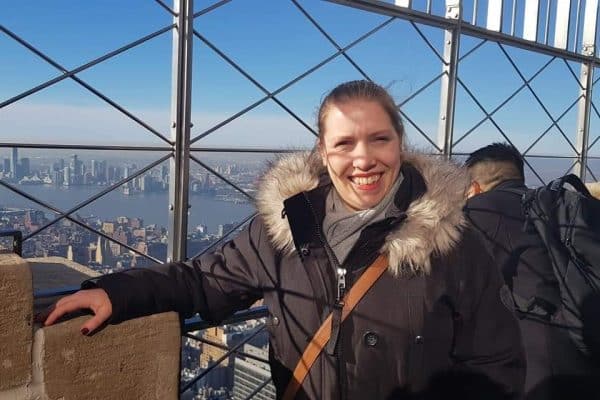
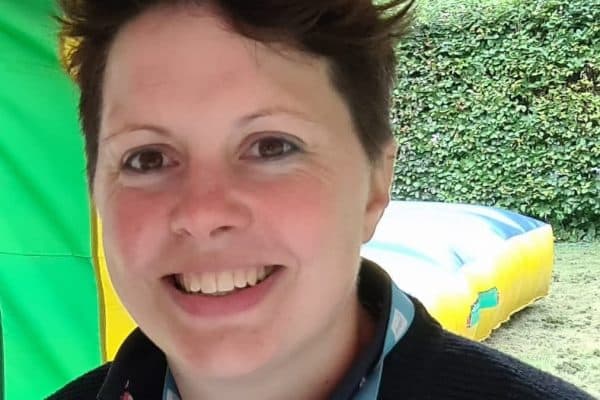
    People Story | Emma Summers | Business Support Assistant

    People Story | Emma Summers | Business Support Assistant

    When I was at school, my ambition was to work with children but after college I started working in a hotel one Friday night and ended up staying there for 6 years, working my way up to duty manager. In 2003 I opted to change to a career in retail and worked for House of Fraser for 10 years, completing a management course and was manager of the men’s and ladieswear floors. I then held store manager positions at USC and Claire’s
    Accessories for 5 years.If I had to write a list of all the different aspects in a job I loved, this would be it. I like the fact that the role is so varied and every day is different. I hadn’t done this
    type of job before but I’m a keen learner with a massive willingness to learn. I like being a sponge and absorbing everything and then putting what I’ve learnt into action.The recruitment role was my first insight into healthcare and I’d also cared for my elderly grandfather. So I applied for a Business Support Assistant position with DMC Healthcare and was successful.I like to be someone who is contributing to change and love that we are all working towards the same goal of providing an outstanding service for our patients and our colleagues – we’re all one team.

    I’m grateful to DMC for giving me the opportunity to do this role as I’ve not had much experience in health. However my customer service experience and communication skills have proven strong assets. I’m based at home, but we do have regular trips to head office to support with various tasks.I call them my “Emma questions” as I’m always asking questions and feel really comfortable to ask as that’s how the team has made me feel.I received a really nice welcome card when I first started. It’s recognised when you’ve done something good – a thank you goes a long wayWhen I worked in retail, none of my weekends were free and holidays were restricted but now I soak up every minute I can get with family and friends and when I had my first Christmas off in 16 years, my husband and I celebrated by travelling to New York. My team were the priority for years and it’s nice to have it the other way round.I’m proud of what I’ve learnt. Here’s a flavour of the kind of projects I’m involved in:
    • Creating the vision and “Trust” values. It’s so important for everyone to come together and be involved.
    • DMC’s first charity event where we raised over £3000 for Mind UK.
    • I’ve had an involvement in every aspect of the organisation whether it’s radiology, endoscopy, dermatology, primary care or at Board level.
    • I organise the external meetings and produce the minutes.
    • I’ve produced newsletters to communicate to internal teams.
    • Various compliance work such as making sure mandatory training is compliant.
    • Involved in HR, moving from paper files to electronic.
    • Coding and scanning documents onto Docman.I’d say bring the skills you have gained in your past and just be yourself. No matter what industry you’re in, customer service is customer service. You can bring that skill set into the healthcare setting.I’d like to develop to a more senior role and attend various courses that will help improve my skill set.I’m thoroughly enjoying working for DMC and enjoy being part of the team and contributing to the one goal we are all aiming for – to provide an outstanding experience for our patients and for us all to deliver the Trust values.Knowledge is a massive thing for me and I’m learning about all aspects of the healthcare sector.

    • MAY 25, 2022
    • 0
    People Story | Dr Lou Toms-Whittle | Primary Care Clinical Lead

    People Story | Dr Lou Toms-Whittle | Primary Care Clinical Lead

    I completed my A levels which covered the three sciences and English literature. After training at Bristol University, I worked as a junior doctor in Swindon before moving to Guy’s and St Thomas’ Hospital for GP training.My friend was working for DMC at the time and head-hunted me to Sheppey, where I become clinical lead. I met the practice manager and was invited in to meet the team – it was the team that sealed it for me. They are an absolutely amazing team of colleagues.

    DMC offered me the opportunity to further my career and become clinical lead, followed by primary care clinical lead. It has also allowed me to develop my interests.I didn’t really enjoy hospital medicine as much as primary care. Here you can really get to know the patient, their families and the community in which they live. That’s what drew me to be a GP.I believe in the NHS and hearing about the healthcare systems in other countries lead me to understand that we are so privileged to have a healthcare system that is free at point of access, no questions asked. It is something I want to protect and running the best it can. Making sure the population can help themselves by promoting selfcare is one way to preserve the NHS.I work as a GP in South London and Kent. Whilst working, I taught medical students at King’s College London medical school and ran simulated clinics at the RCGP. For a couple of years, I ran healthcare inequalities workshops in the LGBT+ community.Driven by my colleague Kerry, we have done a lot of work to improve awareness of menopause. I produced a video along with a symptom checker – it’s not just about hot flushes. Your GP is out there to help with the 100s of symptoms and the effect on people’s lives and workAs a salaried GP, you can perhaps help 30 people in a day. As a clinical lead means you can shape healthcare for 9000 people. But as a primary care lead, I can potentially help tens of thousands of people.

    I look at governance and how we can work smarter, not harder. So many healthcare workers are burning out as pressures increase. I took the learning and what was working well from one site and extrapolated that across the organisation. I undertook a process review, looking at population types and needs.I commenced the campaign in one practice, having noticed an increase in the number of trans patients, particularly young people. I reached out to local charities and asked them what more can we do as a surgery.

    I then ran a health inequalities workshop and staff training, highlighting the barriers, based on the feedback from the charities, as I was keen not to make assumptions based on one voice. We focussed on pronouns, preferred names, gender expression, romantic/platonic attraction, discussing why there are higher rates of alcohol and drug abuse, loneliness, domestic abuse, and wider health inequalities.

    We also attended a youth pride event featuring Ellie’s journal. At the end, we gathered tons of feedback and ideas. As a result, DMC has instigated wider training programmes for staff, gender neutral toilets, more inclusive registration forms and more.I continue to strive towards improving patient care with a particular focus on working with communities, health and social care providers and the voluntary sector to achieve equity in healthcare. I’m particularly proud of improving the DMC healthcare experience for the LGBTQ+ community.You can specialise in a multitude of areas – dermatology, prison doctor, mental health, alcohol abuse etc. There are also opportunities on the business side – to look at the processes, working at scale or having a specialist role with the Integrated care system.Driven by my colleague Kerry, we have done a lot of work to improve awareness of menopause. I produced a video along with a symptom checker – it’s not just about hot flushes. Your GP is out there to help with the 100s of symptoms and the effect on people’s lives and work.I really welcome the opportunities that I’ve had and the ability to work at scale. It has allowed me to strive to provide good healthcare for our patients. I’ve worked with some absolutely amazing colleagues over the years.

    • APRIL 27, 2022
    • 0
    People Story | Leigh Rose | Lead Endoscopy Nurse

    People Story | Leigh Rose | Lead Endoscopy Nurse

    I didn’t take a straightforward route into nursing and started working in a bank at 16. At 20 I had a child and when I returned to work, I worked in finance for a global magazine group.I came to realise that I like endoscopy because there is a different relationship between you and the medics. On the ward, the medics dictate what drugs, what time, what treatments etc. Whereas in endoscopy, the doctors can’t do their job without the nurses.I started a role running a unit at the Ilford treatment centre and ended up taking my first lead position. After about 3 years, I moved to BUPACromwell Hospital and twice received the prize forGreat customer care. Whilst there, I met Dr Devlin, clinical lead at DMC and he invited me to come over to DMC where I joined in Sept 2018.Endoscopy has changed a lot over the years. The nurses need to have the technical knowledge and skills as ultimately the doctor can’t give the patient the full range of treatment without it. We’re constantly learning, either on the job but also external courses and we in turn train others. We also attend the BSG annual 2 day event.Some of the nurses are endoscopy experts who may or may not have jobs in the NHS and work for us on a freelance basis. Some are recovery specialist nurses and some are admission nurses.They all feel like it’s a family.It was a bit hard at first and I couldn’t have done it without some of the best HCA’s I’ve ever worked with. They taught me everything.As I’m dealing with a fast paced environment, I must respond to change in a timely manner and ensure changes are communicated to all members of the team. Working with patients and their relatives requires the ability to communicate complex medical information and to handle difficult situations with tact and sensitivity.I quite like that DMC is a small company where you are seen as a person and not just a name amongst many 100s or 1000s. You have autonomy but they are there to support you when you need it. If you ask for equipment or IT they are very supportive.If you fancy a change of career, I’d say go in with open eyes. It can be emotionally draining, and you need a lot of resilience, but I think for most people they’ll be hooked forever. I can’t imagine doing anything else nowI work part time as a contractor. I work most weekends and 2 days admin in the week. This allows me time to pursue my own interests which currently include learning to play the saxophone and I am just about to join a ‘big band’ to experience playing with others.They are always trying to grow the service and are very responsive to your needs. They are really friendly and you feel you are truly part of a family. We see a lot of the leadership team and feel valued.

Our Vacancies

Join Our Talent Pool

Explore Our Quality

Clinical Effectiveness

Clinical effectiveness means ensuring that all aspects of service delivery are designed to provide the best outcomes for patients. This is achieved by ensuring that the right care is delivered to the right person at the right time they are in need and in the correct setting.

Information

A patient’s information should always be up to date and correct on any systems used. It should also be confidential through correct storage and management of data.

Risk Management

Risk Management involves having robust systems in place to understand, monitor and minimise the risks to patients and staff and to learn from mistakes. When things go wrong in the delivery of care, our staff teams should feel safe admitting it and be able to learn and share what they have learnt, which embeds change in practice.

Patient & Public Involvement

Communication with patients and the public is essential to gain insight on the quality of care we deliver, and any possible problems that can result. Public involvement is equally as important to ensure that patient and public feedback is used to improve services into day-to-day practice for better patient outcomes.

Education & Training

This encompasses the provision of appropriate support to enable staff to be competent in doing their jobs and to develop their skills so that they are up to date. Professional development needs to continue through lifelong learning.

Staff Management

This ensures the organisation recruits highly skilled staff and aligns them with the correct job roles. Staff are supported in professional development and to gain and improve their skills.

Audit

The aim of the audit process is to ensure that clinical practice is continuously monitored and that deficiencies in relation to set standards of care are remedied. Research goes alongside audits to pioneer best practice improvements.